Use the postcard stop when you are already downtown, shopping, eating dessert, or ending a low-effort walk. Buy a card or small print, write one concrete sentence about the day, verify postage through Canada Post, mail it from a Canada Post/post-office stop or current postal outlet, then photograph the card or mailbox as the final story frame.
See the postcard ending before it becomes another errand
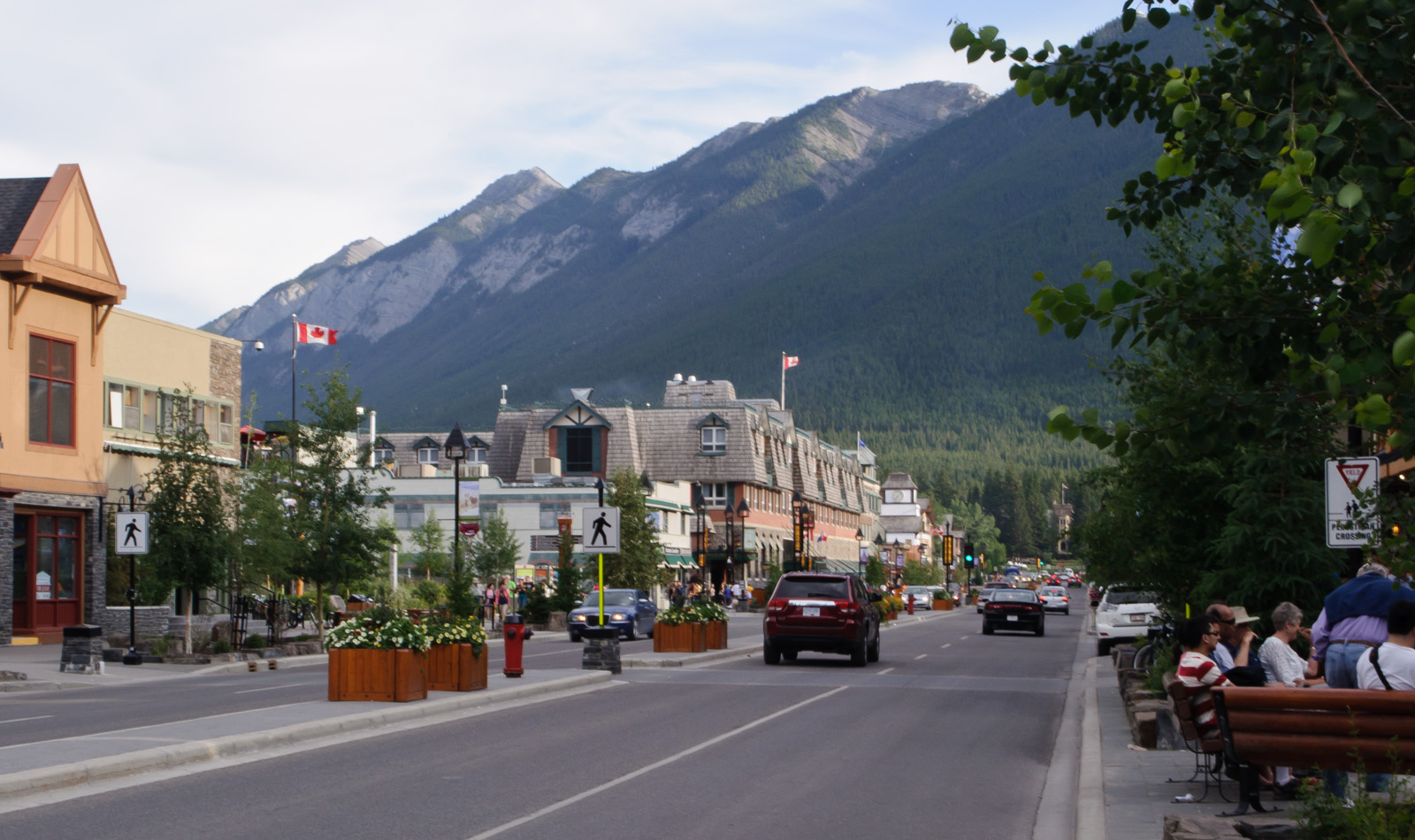
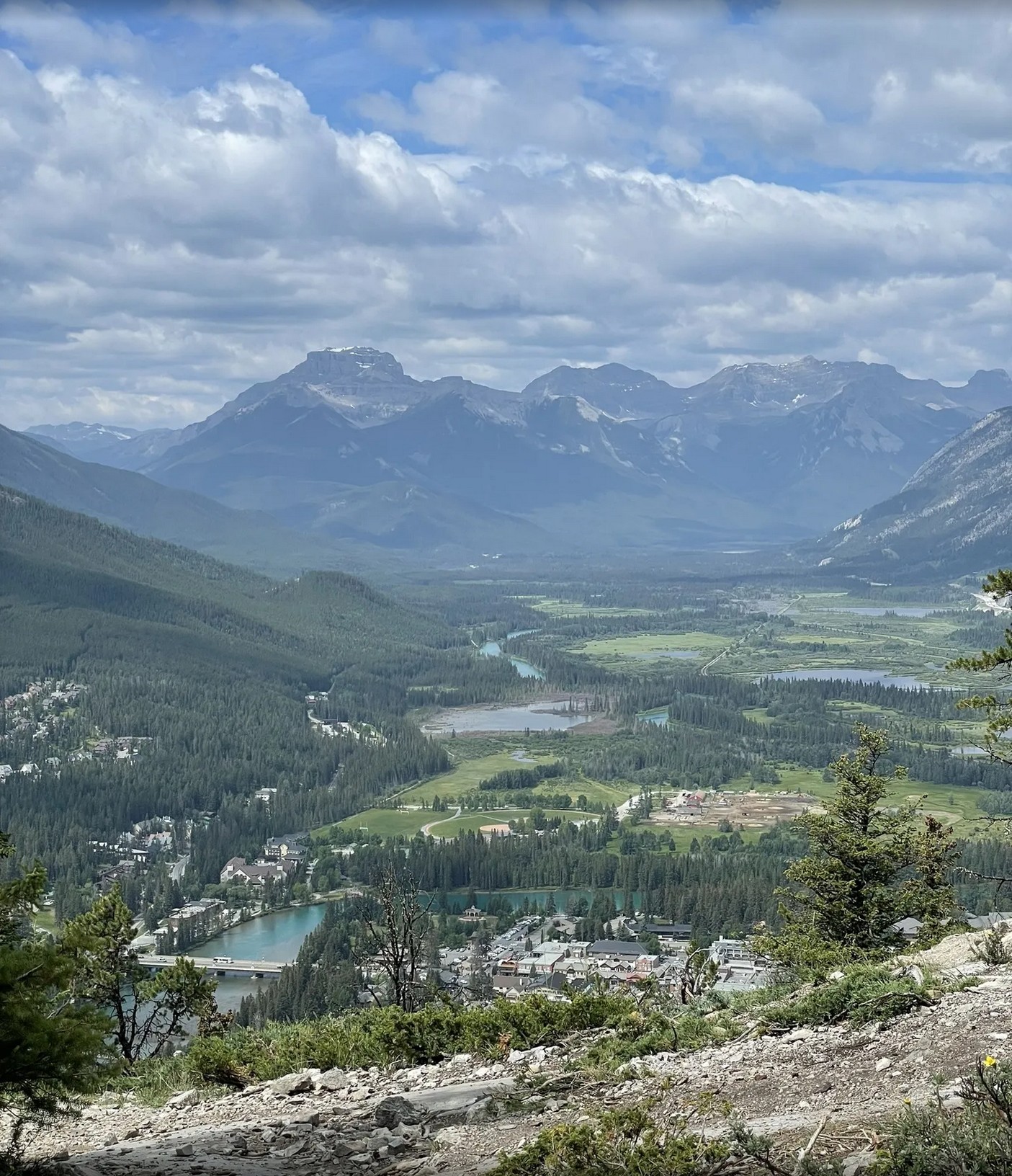
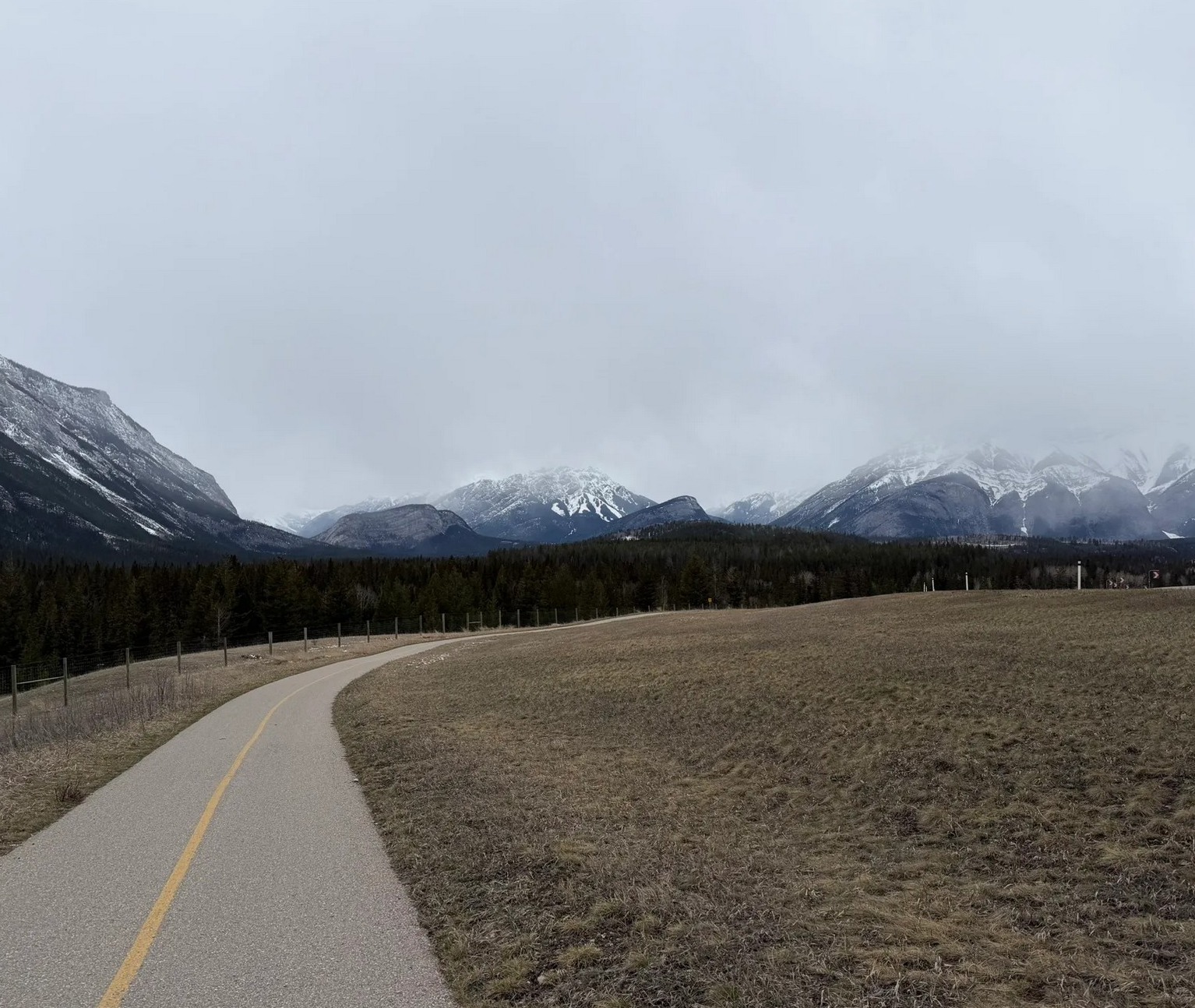
A postcard is not just a souvenir. It creates a second ending after the trip: the visitor gets home, then the Banff memory arrives later. That is why it belongs beside the Photo Story Studio, not only inside a shopping list.
Downtown image: InSapphoWeTrust, CC BY-SA 2.0 via Wikimedia Commons. Other Banff route/view images are project-supplied local photos.
Why a postcard belongs in the Banff place twin
Most travel products stop at digital photos. A postcard is useful because it becomes a physical marker outside the phone: a card on the wall, a note in a drawer, or a small object that arrives after the trip. For couples, families, classmates, or friends, mailing one card to yourself and one to someone else creates a second moment of the trip after everyone has already returned home.
In the Banff guide, this is not a nostalgic extra. It is a real visitor node. The postcard decision connects downtown shopping, sweet shops, coffee, the post office, walking routes, and the Photo Story Studio. It also gives the short movie a better ending than "we took some pictures." The ending becomes: we wrote down what the day felt like and sent it back into real life.
A simple downtown postcard script
- Buy the card while you are already downtown. Use the shopping walk: Banff Avenue, Bear Street, a souvenir shop, sweet shop, gallery, bookstore, or hotel gift area. Do not move the car just to buy a card.
- Write it before the memory gets generic. Use one real detail: the weather, the mountain view, the cold wind, the meal, the person who laughed, the postcard you chose, or why you wanted it to arrive later.
- Check postage from Canada Post. Postage prices change. Canada Post says standard-size mail includes postcards and standard cards, and its pricing page says prices are subject to change without notice. Use the live page instead of copied prices.
- Find the current postal stop. Canada Post says its Find a Post Office tool shows nearby post offices, addresses, hours, and service details. Use that tool or a current map query for Banff Main Post Office / Canada Post Banff before walking. If a postal outlet changes hours, the locator and map app should win over copied text.
- Photograph the memory beat. Take one photo of the postcard, the writing moment, the mailbox/post-office stop, or the street outside. That frame can close the Photo Story Studio export.
Where it fits on the Banff map
Buy the card during the same walk as souvenirs, layers, candy, ice cream, coffee, or a light meal. Big Bear Trading Co. is listed as a Banff Avenue mountain-lifestyle and souvenir anchor; Banff Sweet Shoppe and COWS are listed downtown snack/souvenir stops that can turn the card stop into a family-friendly reset.
Use Canada Post's official finder for current post-office/outlet details, then use the map link to walk or drive only if it already fits the day. A Canada Post public transport-service PDF identifies Banff Main Post Office at 204 Buffalo St, Banff AB T1L 1A0; use that as the map anchor, not as a promise of today's counter hours.
A postcard stop pairs naturally with COWS, Banff Sweet Shoppe, ice cream, candy, coffee, or a small gift. The point is not buying more; it is making the last downtown hour feel intentional.
The card becomes the last beat: map start, view or attraction, food or weather reset, then the card that carries the memory home. It is a stronger shareable story than a random gallery of images.
What to write so it does not feel generic
Write like a visitor, not like a brochure. One sentence is enough if it is specific. Examples:
- "We mailed this after the Banff Avenue walk because the mountain was sitting right at the end of the street."
- "This card is from the cold part of the day when hot food saved the plan."
- "We bought this after the gondola / lake / river walk so the trip would show up again later."
- "The photo on my phone shows where we stood; this card tells why we wanted to remember it."
If the visitor is making a Photo Story Studio export, the caption should say what the card means in the trip sequence: arrival, view, food, card, home. That is why this node belongs in the memory product, not only in a shopping list.
Privacy and address handling
A postcard contains personal addresses and private messages. The website should never publish the full card text, recipient address, sender address, or exact personal home location. If the visitor uses this as a story frame, crop or blur private writing before export, or show only the front of the card, the stamp, the shop exterior, or the mailing moment.
For aggregate place learning, only keep non-sensitive observations with consent: the visitor used a downtown postcard stop, paired it with a dessert or shopping node, and chose it as a memory ending. Do not treat a home address as useful place intelligence.
How this can become a local-business handoff
Shop and memory partner pattern
A shop, sweet store, hotel desk, gallery, or post-office-adjacent business can become a useful node when it answers a real visitor need: where to buy a card, where to buy a small gift, where to get a stamp, where to sit and write, where to mail it, and how to turn the moment into a shareable trip memory. If there is enough traffic, a partner offer could be a card bundle, stamp reminder, QR story prompt, or "mail yourself a Banff memory" display.
This stays useful only if it remains map-connected and current. The visitor should be able to open the shop, map, postage, and Photo Story Studio without re-searching from scratch.
Current links to check before walking
Postage, postal outlet hours, store hours, and operating status change. Use this page for the travel logic, then open the current source before relying on a copied address, price, or store hour.
Use Canada Post's finder for live outlet details and hours. Use the Banff Main / 204 Buffalo Street map query as a navigation shortcut only after the official finder or current map result still agrees.
Canada Post finder How Canada Post finder works Canada Post stamp prices Banff shopping directory
Official sources and live links
Hours, prices, transit schedules, parking rules, closures, and ticket availability can change. Use these links as the current source of truth.